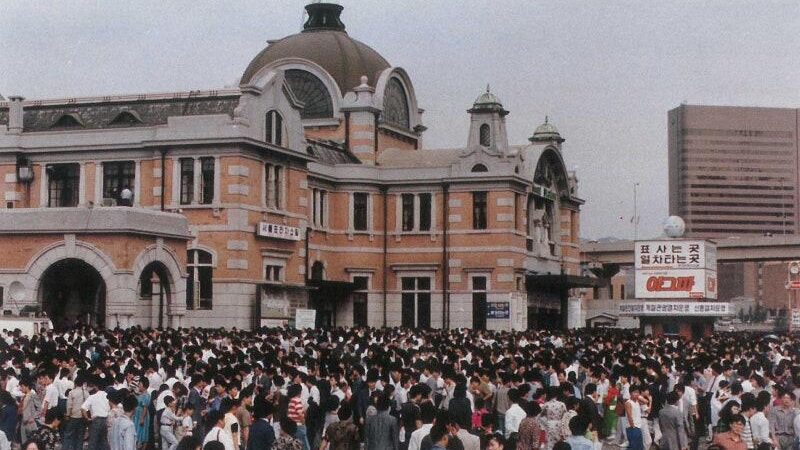
Growing up in Korea in the 1980s, my life changed completely when I was about five years old. I had to leave the countryside and my grandmother behind and move to Seoul.
At the time, I was living with my grandmother in Gokseong, a rural county in southern Korea.
In an earlier story about my childhood in the Korean countryside, I wrote about playing by a river and seeing what looked like the handle of a knife in the water.
To this day, I still don’t know what it actually was.
But to a five-year-old boy, it was terrifying enough.
I ran home as fast as I could, desperate to get back to my grandmother.
But when I arrived, there was a man I didn’t recognize sitting inside the house.
I had probably seen him before.
But in my childhood memory, that day feels like the first time I ever met my father.
I was already frightened by what I had seen at the river.
Then I ran home and found a strange man sitting there.
I went straight into my grandmother’s arms.
After giving me some time to calm down, she introduced the man sitting in front of me.
“He’s your father.”
Hearing those words didn’t suddenly make him feel familiar.
To me, he was still a stranger.
I was a little afraid of him too.
But I think the word father meant something different, even to a small child.
This man was my dad.
If that was what my grandmother told me, then I suppose that was simply how things were.
That was probably how my five-year-old mind accepted it.
And that same day, I had to leave my grandmother and go to Seoul.
Growing Up in Korea in the 1980s: The Day I Left My Grandmother
I had been playing by the river without knowing anything.
While I was out there, my grandmother had already packed everything I would be taking to Seoul.
I could no longer continue living with her in the countryside.
I was getting closer to school age, and it was time for me to live in Seoul with my parents.
But how much could any of that have mattered to a five-year-old?
I just wanted to keep living with my grandmother.
I loved my life with her.
So when it was time to leave, I cried.
And cried.
My grandmother had always been especially gentle with me.
In my memory, she was smiling that day.
I don’t remember seeing her cry.
But looking back now, I imagine it must have been painful for her too.
Maybe she did cry.
Perhaps I didn’t see it because I was crying so much myself, or perhaps that part of the memory simply disappeared over the years.
Either way, I left my grandmother’s house holding my father’s hand.
I don’t remember whether we walked to the train station or took some kind of transportation.
But one thing I remember for certain.
That day, I went to Seoul.
The Soda and Boiled Eggs My Father Bought Me
Trains were much slower in those days.
I don’t remember exactly how long the journey from Gokseong to Seoul took, but on the slower trains of those days, it felt like a long trip to a five-year-old.
On the train, my father bought me snacks to comfort me after all that crying.
Korean trains had something back then that you don’t really see anymore.
A vendor would push a small cart through the passenger cars, selling drinks and snacks.
There were soft drinks, boiled eggs, butter-grilled squid, and other things to eat during the journey.
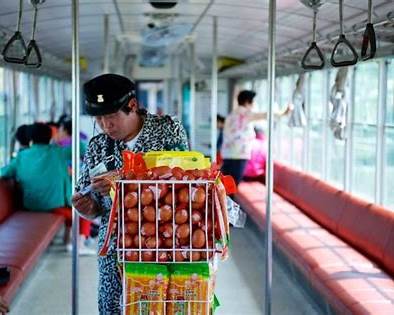
What I clearly remember having that day was soda and boiled eggs.
Thinking about it now, they were nothing special.
A bottle of soda and some boiled eggs.
But to me, they tasted incredibly good.
I was a five-year-old who had just cried his heart out after leaving his grandmother, sitting on a train with a father who still felt like a stranger.
And he bought me soda and boiled eggs.
That’s what I remember.
On that slow train, I was heading toward the biggest city I had ever seen.
Seoul Frightened Me More Than It Amazed Me
Then we arrived at Seoul Station.
Only a few hours earlier, my entire world had been the countryside.
There was a river.
There were trees.
There were places where I could run around and play.
Then I stepped into Seoul.
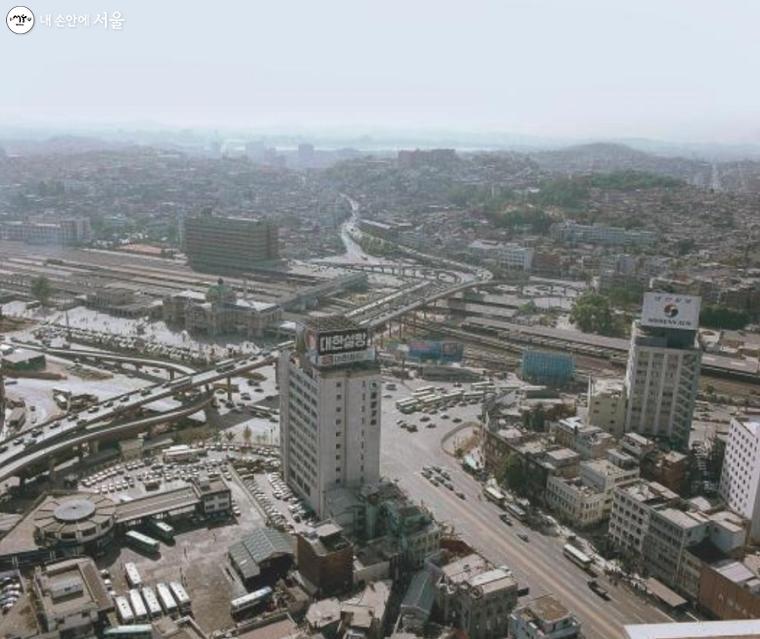
There were people everywhere.
There were cars everywhere.
And there were so many buses.
Even today, countless bus routes pass through the area around Seoul Station, but to my young eyes, the endless lines of buses back then seemed enormous.
Buildings were packed together.
It felt as though there were hardly any trees at all.
Across from Seoul Station stood a huge building belonging to a company called Daewoo.
To a five-year-old, it looked almost like a palace.
And then there were the people.
Huge crowds moved quickly in every direction.
Their faces seemed expressionless to me, and everyone looked like they were in a hurry.
I wasn’t amazed by Seoul.
I wasn’t excited by how big or busy it was.
If I had to choose the most accurate word for what I felt that day, it would be this:
I was scared.
There were too many people.
There were too many cars and buses.
Everyone seemed to be moving too quickly.
Everything was unfamiliar.
“Don’t Let Go of Your Father’s Hand. Someone Will Cut Off Your Nose.”
After we got off the train and made our way out of Seoul Station, some people were waiting for us.
They were my maternal uncles—my mother’s younger brothers.
As I remember it, they were still students at the time.
They were happy to see their little nephew who had just arrived from the countryside.
But Seoul Station was crowded.
Maybe they were worried that a five-year-old who had just arrived from a rural village might get lost.
Or maybe they simply wanted to tease their little nephew.
They told me:
“Hold your father’s hand tight. If you let go, a stranger might cut off your nose.”
It sounds ridiculous now.
But I believed them.
And I didn’t believe it for just a few minutes.
I believed it for quite a long time.
Back then, adults sometimes frightened children with stories like this when they took them somewhere crowded.
The point wasn’t that people were actually walking around cutting off children’s noses.
It was a way of scaring a child enough that they wouldn’t wander away and get lost.
But how was a little kid supposed to understand that?
We were worried about our noses.
There were even children who would walk through crowded places holding a parent’s hand with one hand while covering their own nose with the other.
The adults may have found it funny.
To the children, it was serious.
I believed it too.
Seoul was already frightening enough.
Now I had another problem.
I couldn’t let go of my father’s hand.
I had a nose to protect.
And That Was How My Life in Seoul Began
That was how I began living in Seoul with my parents.
At first, everything was unfamiliar and frightening.
The fact that these people were my parents gave me at least some sense of comfort.
But children don’t always need very long to adapt.
Just a few days later, I was already running around the neighborhood in front of our house like crazy.
Just as I had done in the countryside.
The place had changed.
I was still a little boy.
Looking Back, That Was the Day My Life Changed
At the time, I didn’t want to come to Seoul.
I wanted to stay in the countryside.
I loved living with my grandmother.
So when my father came to take me away, the fact that I had to leave her mattered far more to me than finally being with my parents.
But now that I’m an adult, I see that day differently.
That was the day my life began moving in a completely different direction.
What would have happened if my parents hadn’t brought me to Seoul?
I don’t know.
Maybe I would have stayed there and become a farmer.
Maybe not.
There’s no way to know.
But I probably would have lived a very different life from the one I live today.
That morning, I was a little boy living with his grandmother in the countryside.
I was playing by a river.
Then I ran home and was told that the strange man sitting there was my father.
My belongings had already been packed.
I cried as I left my grandmother.
I ate soda and boiled eggs that my father bought me on the train.
And a few hours later, I was standing in the middle of Seoul Station, surrounded by more people, cars, buses, and buildings than I had ever seen before.
My entire world changed in a single day.
I didn’t understand that at the time.
To a five-year-old, it was simply a frightening day when I had to leave my grandmother and go somewhere unfamiliar.
But looking back now, I understand.
That was the day my life changed.
What was your childhood like in the 1980s?
Did you spend your days running around outside because there wasn’t much else for kids to do, like I did growing up in Korea?
Korea and America may have been very far apart.
But maybe childhood in those days was more similar than we think.