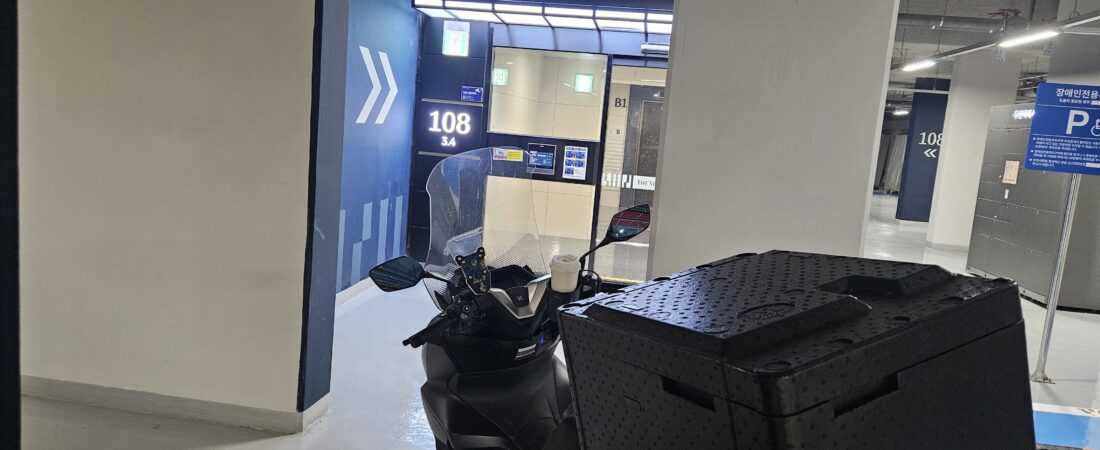
Food delivery in Korea is incredibly convenient.
Before I started doing delivery work myself, I was just another customer.
If I got hungry late at night, I opened an app and ordered something. Rain or snow, somehow the food still arrived at my door.
I was always grateful to the delivery riders who brought it.
But once I started getting on a scooter and delivering food myself, I began noticing things I had never seen as a customer.
Behind Korea’s convenient delivery system, there is still a person who has to pick up the food, ride through traffic, get into the building, take the elevator, and carry the order all the way to someone’s front door.
These days, I’m one of those people.
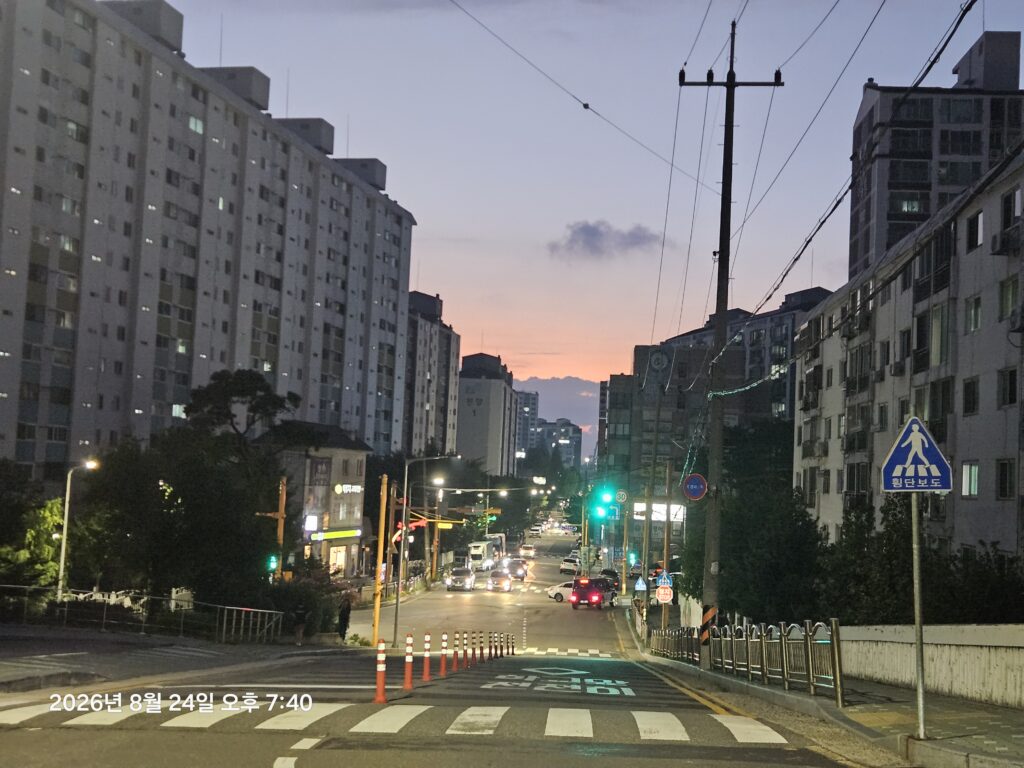
What Do I See When a Delivery Order Comes In?
When an order appears in the delivery app I use, I can see two important locations on the map.
The restaurant where I need to pick up the food and the customer waiting for it.
The restaurant name and the amount I’ll be paid for the delivery also appear on the screen.
Once I accept the order, I can see whether the food is still being prepared or is already finished.
With the app I use, orders are generally assigned to riders around the time the food should be ready.
So most of the time, the order is waiting when I arrive.
From my own experience, if I make ten deliveries, maybe one or two will still be cooking or packaging the food when I get there.
Then I pick it up and head toward the customer.
It sounds very simple when I write it like that.
But this is where the actual delivery begins.
What Are Koreans Ordering So Much of?
The food I deliver most often is, unsurprisingly, fried chicken.
Korea’s fried chicken market is huge.
There are countless brands and an incredible variety of chicken.
It wouldn’t be much of an exaggeration to call fried chicken one of Korea’s signature delivery foods.
I deliver plenty of Korean food too.
But there’s another food I’ve been seeing constantly lately:
malatang.
From what I personally see while working, sometimes it feels like I deliver more malatang than almost anything except chicken.
One interesting thing about Korean delivery culture is that ordering food isn’t something reserved for special occasions.
It has simply become one of the ways people eat their everyday meals.
I once even delivered food to a home directly across from the restaurant.
Literally across from it.
There was no point getting back on my scooter.
I got off, walked into the restaurant, picked up the food, and then walked it over to the customer.
It was a little ridiculous.
But for a delivery rider?
That was an easy one.
I Don’t Just Deliver to Apartments
Foreigners thinking about Korea might picture enormous apartment complexes.
Apartments are such a big part of everyday life here that I’ve written separately about what living in a Korean apartment is actually like.
And apartments are certainly convenient places to make deliveries.
The addresses are clear, there are elevators, and the building and unit numbers are usually relatively easy to find.
But based on my own deliveries, I’d say my destinations are roughly split between apartments and other types of housing.
I also deliver to villas, officetels, and detached houses.
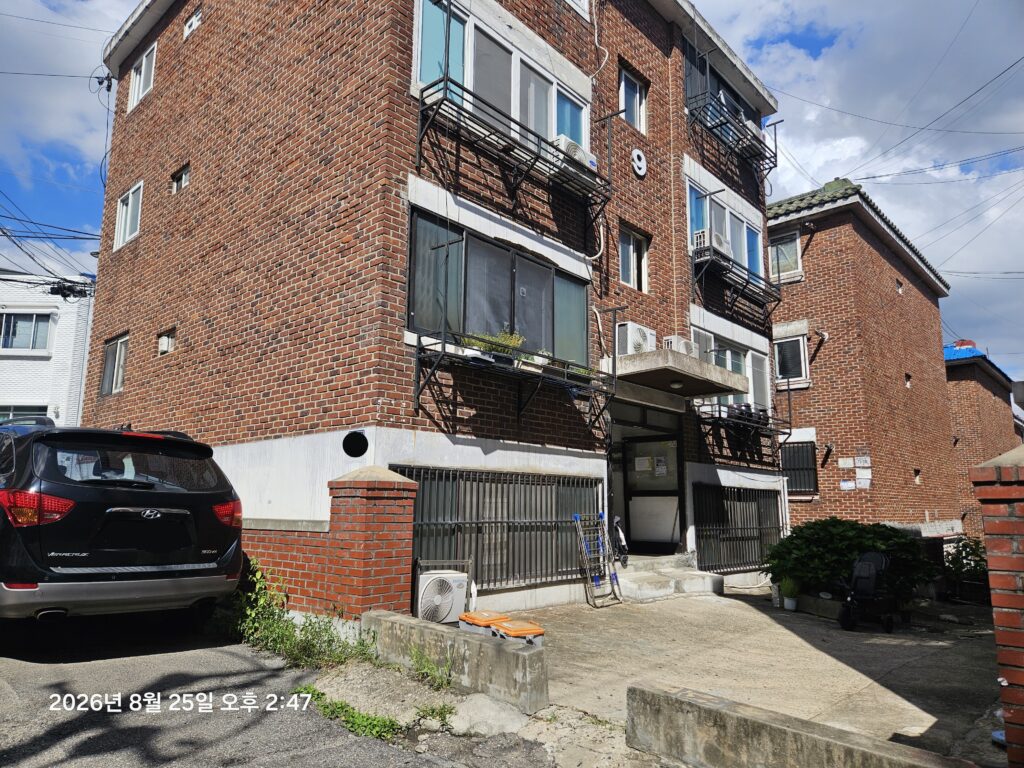
In Korea, a “villa” usually refers to a smaller low-rise multifamily residential building, not the luxury vacation home the English word might suggest.
Korea has a lot of apartments, but obviously not everyone lives in one.
One interesting part of doing this job is that it takes me into all kinds of Korean residential areas I otherwise would have little reason to visit.
So How Does a Delivery Rider Get Into a Korean Apartment?
Many Korean apartment buildings have secured entrances that prevent outsiders from simply walking inside.
If you’re driving a car, there may also be a vehicle barrier at the entrance to the complex.
I mainly deliver by scooter.
A scooter can usually pass through an open space beside the vehicle barrier, so I normally don’t need to wait there or contact the security office.
Then I reach the secured entrance to the apartment building itself.
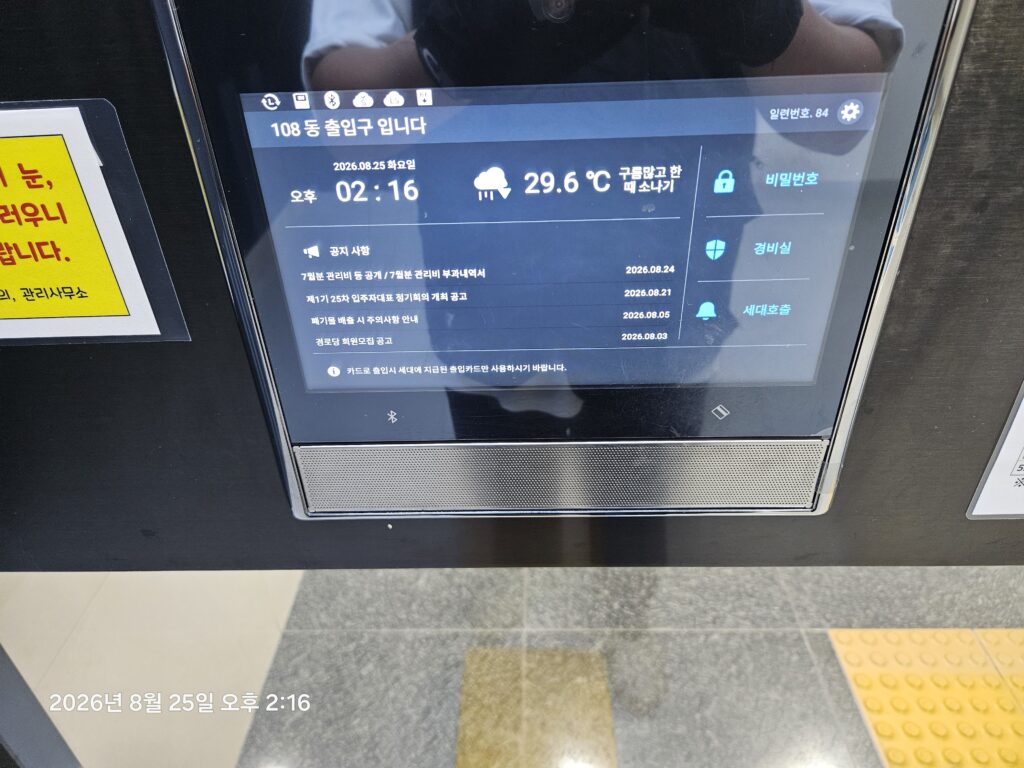
Sometimes the customer leaves the building access code in the delivery instructions.
If not, I use the intercom to contact the apartment and have the customer let me in.
Once inside, I take the same elevator residents use.
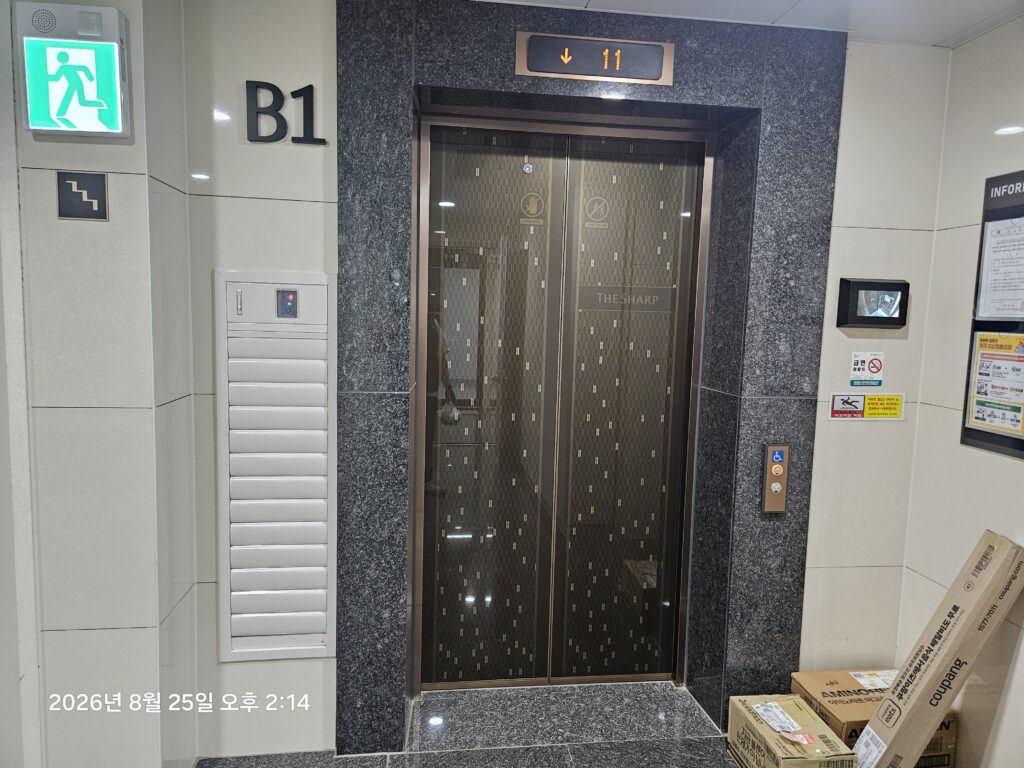
At least where I usually work, this is the normal process.
Not every apartment complex in Korea works exactly the same way, of course.
There have also been controversies in Korea over how delivery riders are allowed to enter certain apartment complexes.
I have some strong feelings about this.
People want the convenience of packages and food arriving at their homes.
But sometimes I also feel there are people who look down on the workers who make that convenience possible.
It’s something I’ve become much more sensitive to since becoming a delivery rider myself.
I Almost Never See the Customer
I’ve never lived in the United States, so I’m not going to pretend I know exactly what making deliveries there is like.
But when I deliver food in Korea, I almost never meet the customer face-to-face.
Even if I made 20 deliveries in a day, I might not meet a single customer.
Most orders are left outside the apartment door.
Occasionally, I run into someone who has come outside to smoke while waiting for their food.
That’s more the exception than the rule.
Some delivery riders actually like this work partly because they don’t have to deal with many people.
I understand that.
I don’t particularly enjoy meeting customers while I’m delivering either.
Leaving the food at the door, taking the photo, and moving on to my next delivery is much easier.
Taking a Photo Is Part of Finishing the Delivery
Leaving the food at the door isn’t quite the end of the job.
With the app I use, I have to take a photo showing that the delivery was completed and upload it.
Completing this process is part of confirming the delivery so I can get paid for it.
That photo matters.
Problems can happen.
I learned after becoming a rider that there are cases involving dishonest customers who claim they never received their food, especially when a delivery photo is blurry or doesn’t clearly show where the order was left.
The food may have been delivered, but someone can still try to get a refund and effectively eat for free.
I personally haven’t suffered a serious problem because of a customer doing this.
But it’s one of those things I never thought about when I was simply the person ordering dinner.
The Request I See All the Time: “The Baby Is Sleeping”
Delivery instructions can reveal little pieces of everyday Korean life.
There’s one request I see all the time:
“The baby is sleeping. Please don’t ring the doorbell.”
In my experience, requests like this are extremely common.
There are times when I see something similar on roughly one out of every two orders.
Of course, I quietly leave the food at the door.
But occasionally, I get instructions that leave me completely confused.
One customer told me not to ring the building intercom either.
There was just one problem.
They hadn’t given me the entrance code.
Don’t ring the intercom.
No entrance code.
So… how exactly am I supposed to get inside?
Delivery work occasionally comes with little mysteries like this.
Do You Tip Delivery Riders in Korea?
I certainly don’t expect it.
Tipping simply isn’t an ordinary part of everyday life in Korea.
At least when I’m doing delivery work, I don’t work with the expectation that a customer will give me a tip.
Tips themselves aren’t completely foreign to me.
When I worked part-time at a restaurant in my early 20s, I received tips on a few occasions.
I remember famous Korean celebrities sometimes leaving tips when they visited.
But those were exceptions.
When Koreans eat at a restaurant or order delivery, calculating an additional percentage of the bill as a tip is not a normal part of the transaction.
So from my perspective as a delivery rider in Korea, what matters financially is the delivery fee shown in the app, not a tip from the customer.
When It Rains, Delivery Pay Goes Up
Where I work, daytime orders don’t always feel particularly busy.
Sometimes there may be enough demand for only one or two deliveries an hour.
But things change after around 5 p.m.
Once dinner time begins, orders increase quickly.
I can make three or more deliveries in an hour, and sometimes I carry multiple orders at once.
Recently, I carried four food orders at the same time.
Rain changes things too.
A delivery that might normally pay around 2,500 won can rise above 4,500 won on a rainy day, and I sometimes see offers paying even more.
That brings more riders out because there’s more money to be made.
I’m a little different.
I really hate riding a scooter in the rain.
Recently, it had been raining since morning, but I didn’t go out to work until after 4 p.m.
I might be able to earn more money in bad weather, but riding a scooter on wet roads isn’t something I enjoy.
The Uncomfortable Side of Food Delivery in Korea
I don’t think I can write about the convenience of Korean delivery without mentioning this.
I see delivery riders breaking traffic laws all the time.
Some run red lights. Others cross roads in ways they shouldn’t.
When I’m working, I see these things repeatedly.
From what I observe, many riders are trying to finish one delivery quickly so they can move on to the next order.
And when you see it often enough, something strange happens.
It becomes so common that it can almost start to look normal.
But it isn’t.
It’s illegal, and it’s dangerous.
Finishing a delivery quickly is never more important than getting home without an accident.
Rider safety has become a serious enough issue that the Korean government and major delivery platforms have been working together on measures to make delivery work safer.
I ride a scooter too, so I can’t treat this as if it were somebody else’s problem.
This is also part of the reality behind Korea’s fast and convenient delivery culture.
The Biggest Thing That Changed After I Became a Rider
Even before doing this job, I never thought badly of delivery riders.
Actually, it was the opposite.
Whether it was late at night, raining, or snowing, I appreciated the people who brought food to my home.
I tried to treat them politely when I ordered.
What surprised me after becoming a rider was discovering how many situations customers can create that make a simple delivery unnecessarily difficult.
Recently, I had an order going to a public institution that an ordinary visitor couldn’t freely enter.
I needed to contact the customer to get inside.
They didn’t answer.
I called again.
And again.
I ended up calling about 15 times.
Still no answer.
Eventually, I couldn’t keep waiting.
I left the food at the entrance, took the required photo, and left.
Situations like that genuinely irritate me.
A delivery rider has another order to get to, and the time spent standing around waiting is part of our working day too.
There’s a Person Behind Korea’s Convenient Delivery System
When I was only a customer, all I saw was what happened after I pressed the order button.
Food arrived.
Now I know what happens in between.
Someone goes to the restaurant.
Sometimes they wait for the food.
They load it onto a scooter.
They ride to wherever the customer happens to be—an apartment, villa, officetel, or house.
They get through the building entrance.
They take the elevator.
They leave the food outside the door.
They take a photo.
Then they head back to the scooter and wait for the next order.
Korea’s food delivery system really is convenient.
I use that convenience as a customer too.
But after becoming a delivery rider myself, there’s one thing I see much more clearly than I did before.
Apps don’t carry food to your door.
At the very end of the system, there is still a person carrying someone’s dinner to their front door.
If you want to understand what Korean delivery culture is really like, I think that person should be part of the story too.