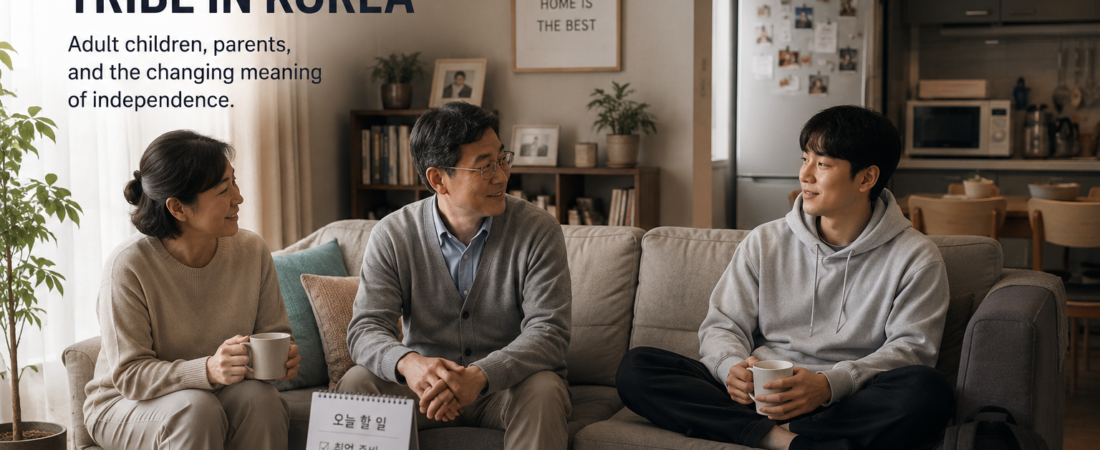
Korean adults living with parents is common enough that Korea even has a term associated with the phenomenon: kangaroo-jok.
I don’t think Korean parents love their children more than parents in other countries do.
That would be a strange thing to say.
If Korean parents love their children more, does that mean parents in other countries love their children less?
I don’t think love can be compared that way.
But Korean parents’ concern for their children can sometimes seem a little… excessive.
At least, that’s how my parents seemed to me when I was growing up.
My parents were constant naggers.
It felt like I heard them nag me a hundred times a day.
Obviously, I never actually counted.
It just felt like that many.
Maybe that’s why, by the time I was in high school, I already wanted to move out.
There wasn’t some grand reason behind it.
I just wanted to escape my parents’ nagging as soon as possible.
I Was a Korean Kid Who Couldn’t Wait to Move Out
In reality, though, it took me quite a while.
I went to university after completing my military service, and later I was living with my parents in Gyeonggi Province while working in Seoul.
The commute was too long.
After doing it over and over, I eventually thought:
“I should just live in Seoul.”
I was probably around 25 or 26.
So I rented a tiny one-room apartment in Seoul and moved out of my parents’ home for the first time.
I still remember how I felt.
I was incredibly happy.
“Wow. I’m finally an adult.”
Nobody was there to nag me.
Nobody cared what time I came home.
I had my own space.
It felt like I’d finally gotten the freedom I’d wanted since high school.
Looking back, though, I’m not sure I could call it complete independence.
My parents helped me with the housing deposit.
I had moved out of their house, but I was still standing on their support.
That’s why today I think moving out and becoming independent from your parents aren’t necessarily the same thing.
Then the Bills Started Arriving
At first, living alone was great.
Then, before even a month had passed, the bills and everyday expenses started showing up.
I remember being surprised.
“Wait, I have to pay for this too?”
And then another thought occurred to me.
“My parents have been paying for all of this the whole time.”
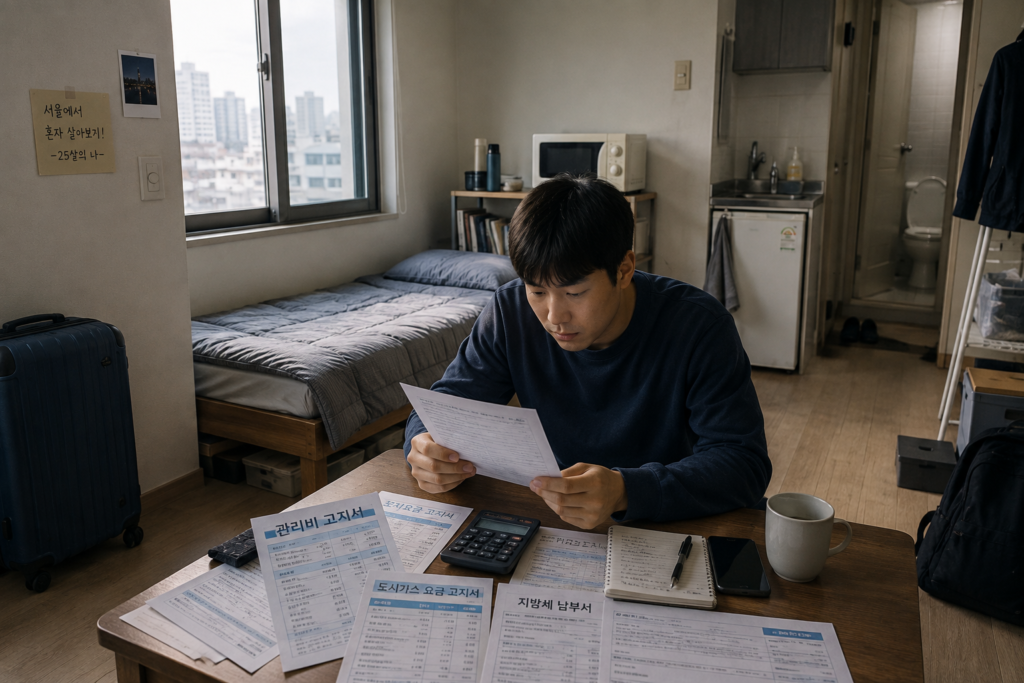
You don’t really see it when you’re living with your parents.
You use electricity and water.
You eat.
You sleep in a home.
You use things around the house whenever you need them.
But somebody has been paying for all of it.
Once I started living on my own, I began to see that.
Becoming an adult wasn’t just about gaining the freedom to live without someone nagging me.
It also meant becoming responsible for the cost of my own life.
My First Attempt at Independence Lasted About Six Months
My first experience living alone didn’t last very long.
About six months later, I became seriously ill.
I couldn’t continue working, so eventually I moved back into my parents’ home.
And that was the end of my first attempt at independence.
I’m still not sure whether I should call it a success or a failure.
I had rented my own place and experienced living alone.
I had enjoyed being away from my parents.
But they had helped with the deposit, and eventually I couldn’t maintain my life on my own and had to move back home.
At least I learned one thing.
Independence wasn’t something you achieved simply by changing your address.
Now I’m the Parent
Years passed, and now I’m raising a child of my own.
And being a parent has helped me understand something about my own parents that I couldn’t understand when I was young.
Sometimes I look at my child and worry.
“How is this kid going to survive in such a difficult world?”
Because after living as an adult myself, I know it isn’t easy.
I’ve been working continuously since I started earning money, but life keeps finding places for that money to go.
You need somewhere to live.
You need to eat.
There are bills to pay.
And when you have a family, there are even more things you’re responsible for.
So when I think about my child growing up, I feel protective.
If I could, I’d like to earn enough money to protect and support my child until I believe they’re capable of living independently.
Maybe my parents felt something similar when I was young.
But there’s another side to it.
Someday, I also want my child to be able to live without me.
I can’t live my child’s life for them forever.
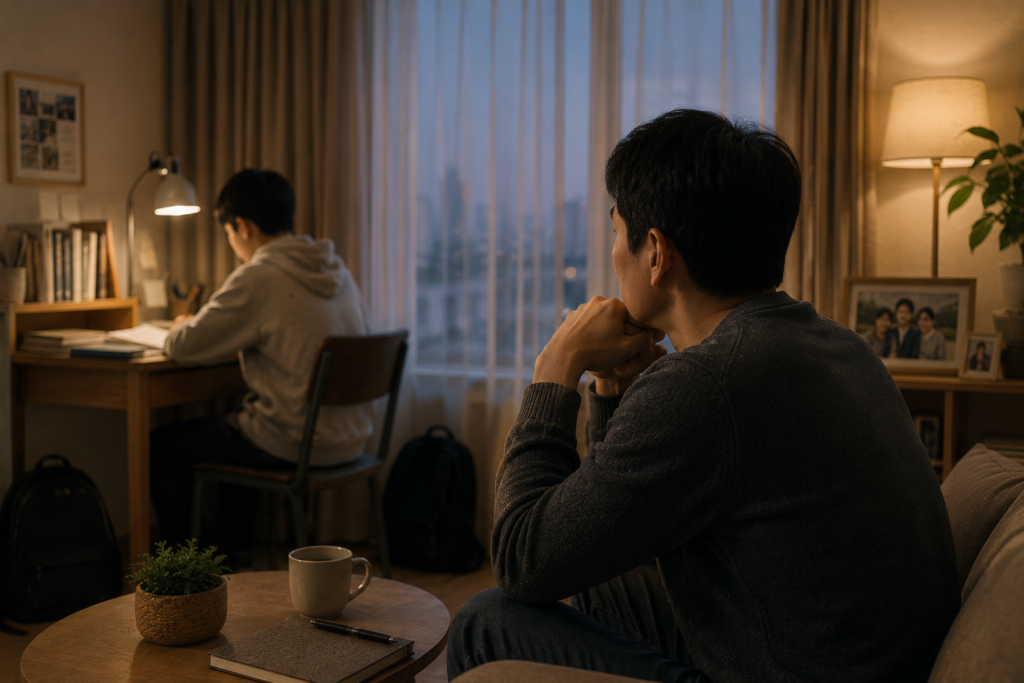
Are Korean Adults Living With Parents Really Less Independent?
Of course, not every Korean parent thinks the same way.
Today, there are parents who believe their children should move out once they become adults.
Maybe at 20.
Maybe after military service.
Maybe after getting their first full-time job.
Every family has a different idea of when that moment should come.
But something else is changing too.
The children’s thinking.
When I was young, I wanted to escape my parents’ interference and nagging as quickly as possible.
Today, some young Korean adults see continuing to live with their parents as a practical choice.
And when you think about the reasons, it isn’t difficult to understand.
Moving out means paying for housing.
Housing in Korea also comes with its own costs, conveniences, and trade-offs.
Your living expenses increase.
You have to take care of your own meals.
You have to do the laundry and clean the house.
Living with your parents can reduce some of those burdens.
For some people, putting up with a little nagging and interference may simply be worth the money they save.
According to a 2024 survey of Koreans ages 19 to 34, 54.4 percent were living with their parents.
Of course, that group includes younger people who are still students.
So it would be misleading to interpret that number as meaning “more than half of young Koreans have failed to become independent.”
What it does show is that living with your parents as a young adult isn’t unusual in Korea.
What Does “Kangaroo Tribe” Mean in Korea?
Korea has a term that often comes up when people talk about this phenomenon.
Kangaroo-jok (캥거루족), or the “kangaroo tribe.”
The expression comes from the image of a young kangaroo remaining in its mother’s pouch.
It’s generally used for adults who continue living with their parents or remain significantly financially dependent on them.
But I think we need to be careful with the term.
Living with your parents doesn’t automatically mean you’re financially dependent on them.
Some people have jobs, earn their own money, and still live with their parents.
Some may contribute money to the household.
Some may even be the main financial provider for their family.
On the other hand, someone can live separately from their parents and still receive significant financial help from them.
So it’s difficult to decide who is independent and who isn’t simply by looking at their address.
I lived alone in my little apartment in Seoul.
But my parents had helped me with the deposit.
Was I truly independent then?
Looking back, I don’t think the answer is that simple.
I Have Friends in Their 40s Who Still Live With Their Parents
Some of my friends are now in their mid-40s and still live with their parents.
They aren’t married.
They still live in the family home.
But I don’t ask them:
“Why are you still living with your parents?”
I’m not entirely sure why.
Maybe part of me thinks it would be respectful not to ask.
Maybe I simply respect the way they’ve chosen to live.
Or maybe I’m just not that curious.
They probably have their own reasons.
And I don’t necessarily need to know what those reasons are.
I’m not saying this is how most people around me live.
Most of my friends got married, had children, and established households of their own.
But I also come across people more often than you might expect who are financially self-sufficient and still choose to live with their parents.
I even know people who don’t technically live with their parents but spend so much time at their parents’ house that they’re practically always there.
So these ways of living don’t seem particularly strange to me anymore.
And Sometimes, I’m a Little Jealous
I don’t look down on those people.
Sometimes, I’m actually a little jealous of them.
Building your own family and raising children comes with more responsibility than you might imagine before you do it.
That doesn’t mean I dislike the life I’ve chosen.
But when life gets difficult, sometimes I notice the weight that friends without families of their own don’t have to carry.
I occasionally find myself thinking:
“At least they don’t have to worry about this.”
Then I look at my own child.
Maybe I’d think differently if I had a large inheritance to leave behind.
But I’m not a parent who can leave my child enough wealth to take care of them for the rest of their life.
So in the end, there’s one thing I want.
I want my child to someday be able to live well on their own.
How long should I help?
When should I expect them to stand on their own?
I still don’t know exactly where that line should be.
Does Living With Your Parents Mean You Aren’t Independent?
When I was younger, I think I had a very simple definition of independence.
Leave your parents’ house.
Live in your own place.
Do whatever you want.
You’re an adult.
After actually living as an adult—and then becoming a parent myself—I don’t think it’s that simple anymore.
You can move out of your parents’ home and still depend on them financially.
You can also live under the same roof as your parents while paying your own expenses, contributing to the household, and taking responsibility for your own life.
So today, I find it difficult to define independence simply by where someone lives.
Maybe it’s more about being financially responsible for your own life.
Accepting the consequences of your own choices.
And eventually being capable of living your life without depending on your parents.
Maybe that’s closer to what independence really means.
But that’s only my way of looking at it.
I was once the son who couldn’t wait to escape his parents’ nagging.
At 25 or 26, I moved into a tiny one-room apartment in Seoul and celebrated because I thought I’d finally become an adult.
About six months later, I moved back home.
Years passed.
Now I’m the parent.
Today, I worry about sending my own child out into the world, while also hoping that someday they’ll be able to stand on their own.
And sometimes I look at friends who still live with their parents and feel a little jealous.
So I still find it difficult to choose one side of this question.
Living with your parents isn’t necessarily bad, and moving out early doesn’t necessarily make you a better adult.
Maybe what matters isn’t how early you leave your parents’ home.
Maybe it’s whether, when the time comes to leave the pouch, you’re ready to live on your own two feet.